GodLike Esports owner: Kronten's rise to the top
GodLike Esports did not reach the top of BGMI by playing safe. The organization has rebuilt rosters, absorbed controversy, lost its biggest star, and still landed the cleanest possible statement…
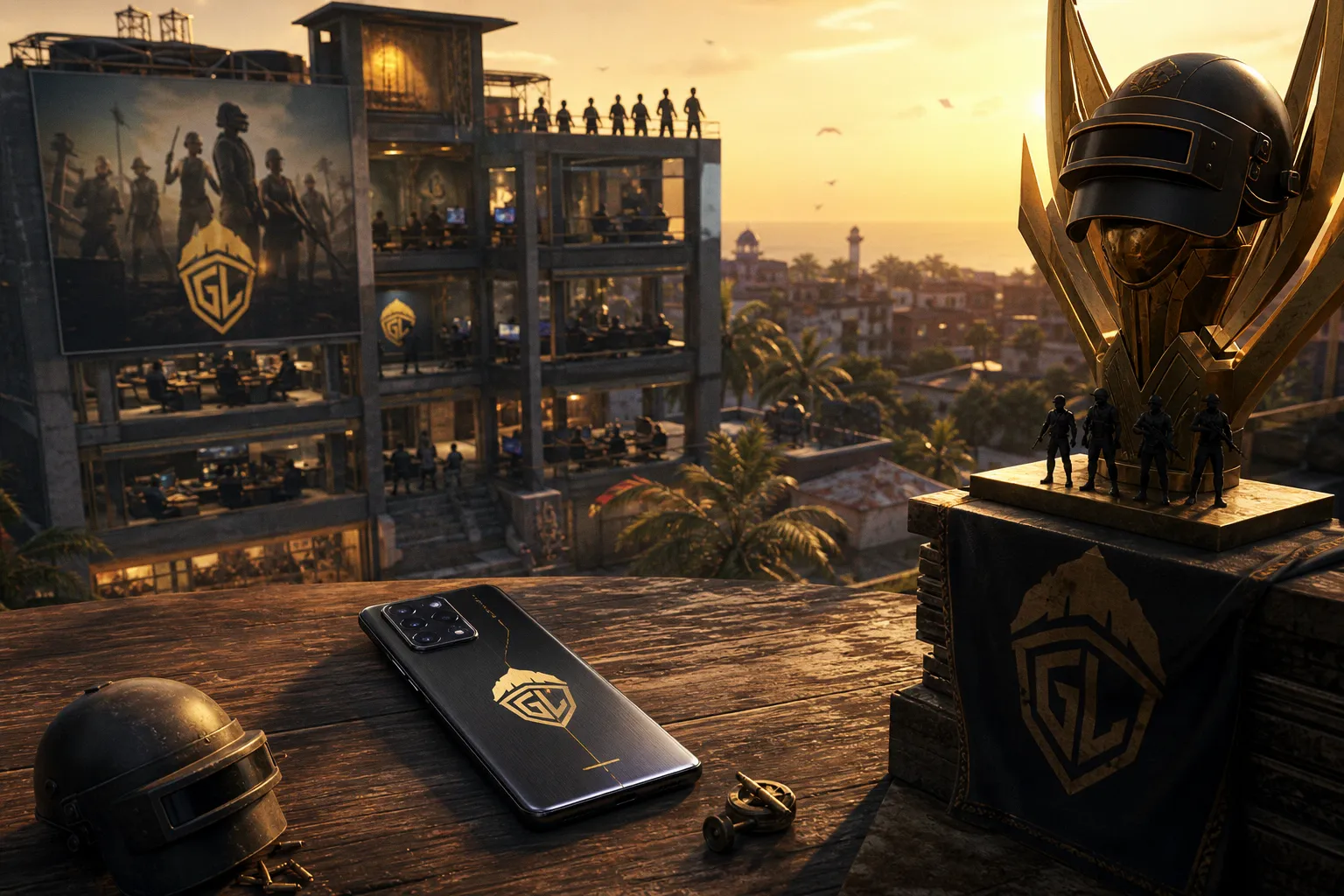
GodLike Esports did not reach the top of BGMI by playing safe. The organization has rebuilt rosters, absorbed controversy, lost its biggest star, and still landed the cleanest possible statement: BMPS 2026 champions and a ticket to the Esports World Cup.
At the center of that push is Chetan Sanjay Chandgude — better known to Indian gaming fans as Kronten. If you are asking who is the GodLike Esports owner, the accurate answer is that Kronten founded the organization in 2018 with his co-founder, Amar Chandgude. But calling him only an owner misses the real frag.
Kronten is the builder behind the tag. Content creator. Operator. Community magnet. The man who turned a PUBG Mobile-era clan into a massive Indian esports brand with a five-floor Mumbai bootcamp, millions of YouTube followers, and a competitive identity that keeps fighting through every rotation.
This is not a story about a logo becoming famous. It is about timing, grind, and a willingness to make the next move when the lobby gets brutal.
From Clash of Clans to PUBG Mobile: Kronten found the lane early
Before the Kronten Gaming name became attached to GodLike Esports, Chetan Chandgude was already working the content-creator route. His earlier channel, Clash with Kronten, focused on Clash of Clans — a reminder that his first read on gaming was not “pick one title forever.” It was simpler: find the community, learn what it watches, then show up consistently.
That instinct mattered when PUBG Mobile exploded in India.
Kronten created the Kronten Gaming YouTube channel in February 2018 and streamed PUBG Mobile for the first time on March 4 that year. The date looks small on paper. In the scene, it marks the beginning of a much bigger rotation. PUBG Mobile was turning from a casual phone game into a full-blown spectator battleground, with scrims, clans, stream sniping drama, creators, and young players suddenly dreaming of pro lobbies.
Kronten was not waiting for a polished industry to arrive. He was building inside the noise.
That early creator experience gave him three advantages that traditional sports owners often spend years trying to buy:
1. He understood audience momentum. Mobile esports lives in chat windows, livestream clips, Discord calls, Instagram posts, and post-match arguments. Kronten had direct contact with that energy.
2. He knew the player mindset. The best mobile competitors are not just mechanically sharp. They are under constant public pressure, balancing scrims, streaming, tournaments, fan expectations, and roster speculation.
3. He built trust before scale. Fans did not first meet Kronten through a corporate launch deck. They met him through gaming content. That makes a difference when an organization needs its community to stay locked in through a rough patch.
The numbers now show how far that audience engine has travelled: Kronten Gaming has crossed 2 million subscribers and accumulated more than 278 million views. That is not merely creator clout. In Indian mobile esports, reach changes the weight of every announcement, every roster reveal, every bootcamp tour, every heartbreak after a bad finals day.
Kronten did not enter esports through a boardroom. He entered through the lobby — and never stopped reading the lobby.
Founding GodLike Esports with Amar Chandgude
GodLike Esports was founded in 2018 by Chetan “Kronten” Chandgude and Amar Chandgude. The early identity was rooted in PUBG Mobile competition, but the ambition was always louder than a clan tag.
That distinction is crucial. Plenty of teams can assemble talented players. Very few become organizations that fans can identify from one graphic, one jersey, one match-day announcement. GodLike found that emotional grip early. The name itself carried confidence. The fanbase carried it further.
The organization’s growth did not come from one miracle tournament run. It came from making itself unavoidable in the Indian mobile gaming conversation. GodLike could be in the spotlight after a clutch win, then return the next day through creator content, team updates, player streams, and scrim chatter. That repetition built recognition. Recognition built fandom. Fandom made the jersey matter.
By August 2021, GodLike made one of its most decisive competitive moves: it acquired the former TSM core BGMI roster, including superstar Jonathan Jude Amaral, known across the scene as Jonathan Gaming.
That was a seismic pickup.
Jonathan was not just another high-damage fragger added for a headline. He was one of the most watched and discussed players in Indian mobile esports. Pairing that star power with the GodLike brand created a pressure cooker: massive expectations, huge viewership, and every tournament performance dissected frame by frame.
The team’s 13th-place finish at the PUBG Mobile Global Championship 2021 showed both the scale of its ambition and the harsh reality of international competition. Domestic fame can carry a team into the arena. It cannot win the final circle for them. International lobbies punish loose rotations, late utility, fractured calls, and even a split-second hesitation.
GodLike kept playing for the top anyway.
| Moment | What happened | Why it hit the scene |
|---|---|---|
| 2018 | Kronten and Amar Chandgude founded GodLike Esports | A PUBG Mobile-rooted team began building a lasting Indian esports identity |
| August 2021 | GodLike acquired the former TSM BGMI core, including Jonathan | The organization added enormous competitive and fan-facing firepower |
| July 2022 | GodLike unveiled its Mumbai bootcamp | The project showed the team was investing in infrastructure, not just hype |
| April 2026 | Jonathan officially departed GodLike | One of India’s biggest esports partnerships reached its end |
| June 2026 | GodLike won BMPS 2026 | The team secured an EWC 2026 qualification slot with a championship-level response |
The 25,000 sq ft signal: GodLike built more than a team house
In July 2022, GodLike Esports unveiled a 25,000-square-foot, five-story bootcamp facility in Mumbai. It was designed to house more than 40 players, creators, and staff members, with 10 streaming rooms and 10 bedrooms.
That is a monster build for a mobile esports organization. And it says a lot about how Kronten sees the game.
A serious bootcamp is not just a place where players sit closer together with better Wi-Fi. It is a performance system. The infrastructure shapes how quickly a roster can review mistakes, reset after a loss, create content without wrecking practice schedules, and maintain the team culture when the tournament calendar gets relentless.
For a BGMI squad, those details are live ammunition. A bad day can start with a weak drop contest and spiral into rushed calls, poor confidence, and disconnected decision-making. A disciplined environment helps stop that bleed. Review the VOD. Fix the rotation. Rework the utility timing. Run it back.
The Mumbai facility also captured a truth about modern Indian esports: the player is no longer only a player.
A top competitor may need to scrim for hours, review matches, film a sponsor segment, appear on a creator stream, build their personal channel, and still be mentally fresh for a high-stakes final. GodLike’s setup was built to serve that reality. Competitive output and content output do not automatically coexist. Without structure, one can cannibalize the other.
Kronten’s background makes the investment feel logical. He came from content. He understood that the cameras never really switch off. The move was not “esports versus creators.” It was a bet that both sides could reinforce each other if the organization had enough room, enough discipline, and enough people working behind the scenes.
There is a financial layer to every large esports facility too. Teams have to think about long-term sustainability rather than only prize pools and sponsor announcements; even the wider discussion around token and altcoin market analysis shows how quickly speculative money narratives can overtake the underlying business. GodLike’s more visible statement was bricks, rooms, systems, and a home base for its talent.
A roster can win a weekend. Infrastructure is how an organization stays dangerous after the confetti is gone.
Roster drama, poaching noise, and the Jonathan departure
No major esports organization scales without collision. GodLike has had its share.
In June 2022, TSM India raised poaching allegations connected to player Shadow. Kronten publicly responded, stating that Shadow had legally terminated his contract before joining GodLike. The key point is simple: the controversy became a loud scene debate, but there was no court ruling establishing GodLike as legally guilty of player poaching.
That episode is worth revisiting because it shows the unstable terrain organizations operate on. Indian mobile esports rosters move fast. A player’s form changes. An in-game leader wants a different system. A team sees a strategic opening. Fans want instant answers, while contract details are almost never public. The gap between what fans know and what teams can disclose becomes fuel for drama.
And then came the bigger rupture.
On April 7, 2026, Kronten confirmed that Jonathan Gaming had departed GodLike Esports after more than four years with the organization. Jonathan subsequently moved to form Team Apex Gaming.
For GodLike supporters, that was not a standard transfer update. It was a full-on emotional wipe. Jonathan had become deeply tied to the GodLike era, both as a competitive weapon and as a symbol of the team’s reach. When a player of that magnitude leaves, every organization faces the same ugly question: does the brand shrink with the star?
GodLike’s answer arrived quickly — and on the server.
The team had to keep its calls clean, manage the outside noise, and prove its competitive core was not frozen in one old lineup. That is the difference between a fan club around a player and an organization with a real backbone.
Kronten’s role in these moments is not about jumping into every social-media fight. It is about keeping the machine moving. Roster transitions are rarely clean. They change chemistry, leadership, fan sentiment, practice dynamics, and even the way opponents prepare for you. The GodLike Esports founder has had to navigate all of that in public, with a fanbase that notices every missing frag and every vague post.
BMPS 2026: the championship response nobody could ignore
Then came the hit.
In June 2026, GodLike Esports won BMPS 2026, earning a qualification slot for the Esports World Cup 2026. After the Jonathan departure, after the questions around what the team would be next, that title did not feel like a routine trophy. It felt like a high-volume answer.
A championship does not erase history. It does not make roster losses painless. It does not turn every prior controversy into nothing. But it can reset the conversation around what a team is capable of right now.
And right now, GodLike has a BMPS crown.
That matters because the path to the top in BGMI is vicious. You do not coast through a major event on reputation. You need zone reads. You need discipline when a fight looks tempting but ruins the next rotation. You need players who can hold their nerve when the final circles become a grenade storm and every elimination point changes the table.
The BMPS win showed that GodLike could still execute under the heaviest pressure. More importantly, it showed the organization could evolve.
For Kronten, that is the real legacy test. Founding a team is one thing. Getting a fanbase to believe in it is harder. Keeping that belief alive after player departures, controversies, shifting game cycles, and changing metas? That is where ownership becomes leadership.
The road to EWC 2026 now gives GodLike another chance to measure itself against a broader field. The global stage has no interest in old fan wars or domestic reputation. It asks a simpler question: can your squad survive the pace, adapt on the fly, and frag when the tournament is on the line?
Kronten’s real achievement is making GodLike bigger than one moment
So, who is the owner of GodLike Esports? Chetan “Kronten” Chandgude is the co-founder and driving force behind the organization, alongside Amar Chandgude. But his rise cannot be reduced to a title line.
He started as a creator. He understood the rise of mobile gaming. He helped turn that understanding into a competitive organization with serious infrastructure, a giant audience, and a brand that has survived high-pressure change. GodLike has worn the weight of superstar expectations. It has taken hits. It has rebuilt. And it has just blasted back onto the biggest stage with the BMPS 2026 trophy.
That is Kronten’s strongest flex: not that GodLike never faced a bad circle, but that it kept finding a way to rotate out.
Now the BMPS champions are headed toward the Esports World Cup — and with GodLike’s next chapter already moving at full speed, who is ready to see what this squad wipes next?