Evaluate GodLike Esports vs Team Soul BGMI Rosters for BMPS
There's something electric about these two names sitting next to each other on a bracket. GodLike Esports and Team Soul aren't just teams — they're tectonic plates in Indian BGMI, and every time they collide, the ground shifts beneath the rest of the scene.
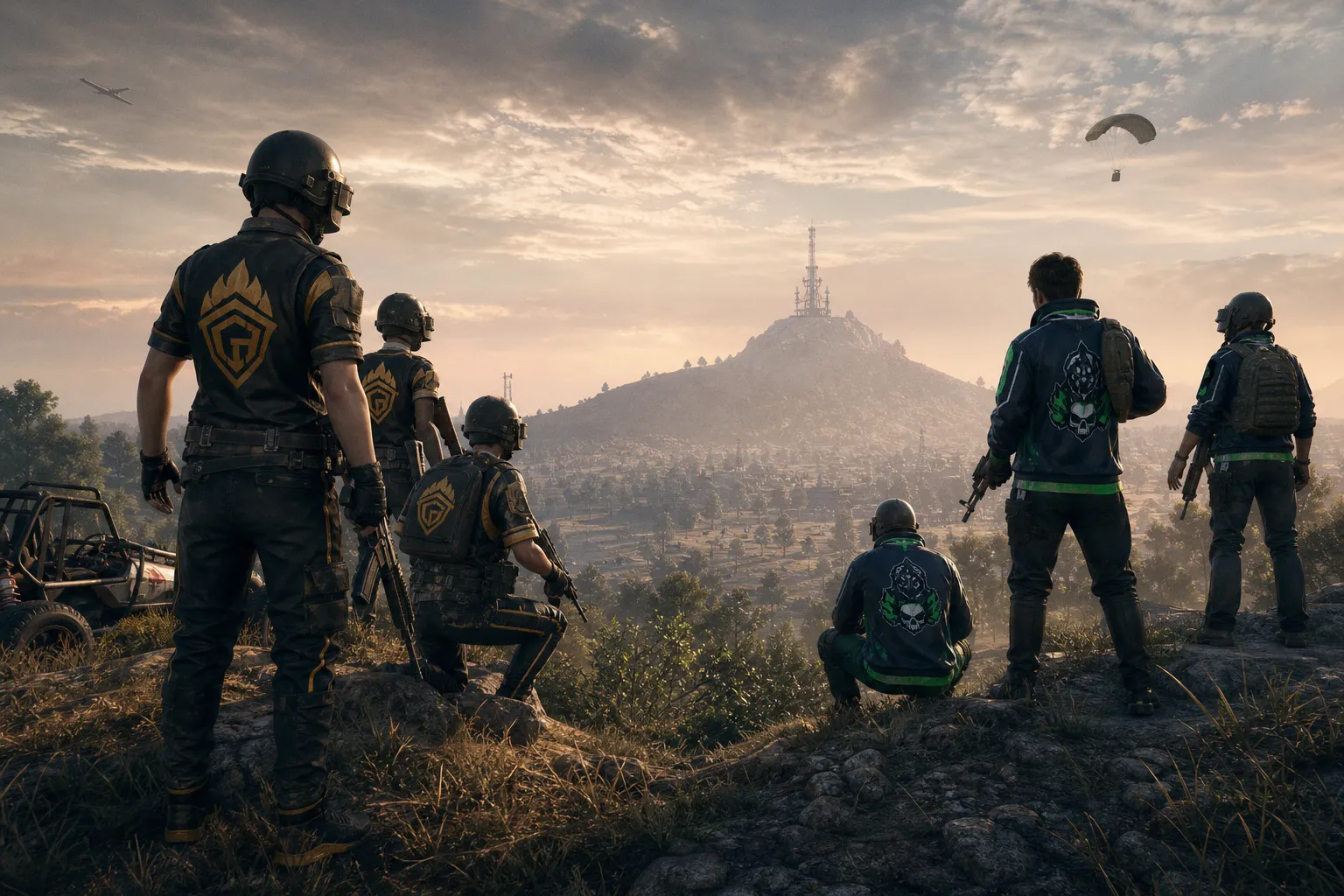
GodLike Esports vs Team Soul: The BGMI Roster War That Defines BMPS
BMPS is looming, and both organizations have made moves, held their ground, or quietly reshuffled in ways that tell you everything about where they think they stand. This isn't a polite comparison chart. This is an autopsy of two rosters built on completely different philosophies, and one of them is going to leave BMPS with serious questions to answer.
Let's get one thing straight before we go deeper: the BGMI competitive landscape in 2024–25 is brutally unforgiving. Third-party tournaments have exploded, scrims are warzones of experimentation, and the gap between a top-4 team and a top-12 team is thinner than ever. Which means roster chemistry isn't a nice-to-have — it's oxygen. And when you look at how GodLike and Team Soul have each approached that reality, the contrast is stark enough to write a novel about.
The Jonathan Problem (And Why GodLike Built Everything Around Him)
GodLike Esports made a decision years ago that every roster move since has orbited: Jonathan Amaral is the sun, and everyone else exists in his gravity. It's not subtle, and it's not accidental. Jonathan's mechanical ceiling in BGMI is genuinely absurd — his sprays are calibrated to a degree that makes other fraggers look like they're playing with one hand, and his ability to convert 1v2 situations into highlight reels isn't luck, it's a pattern you can set your watch to.
For related context, see My Indian Boyfriend: The Golden Mile Secures UK Distribution.
For related context, see KashKick Survey Reveals Mobile Gaming as a Daily Habit and Income Source for Americans.
But here's where it gets interesting: building around a generational talent creates structural dependencies that can crack under specific pressures. ClutchGod as IGL has evolved into a facilitator rather than a dictator, and that's worked brilliantly when the team is rolling — when Jonathan is hot, when ZGOD is finding angles, when the rotations click. The question BMPS will force is simpler and more brutal: what happens when your star has an off day?
Because GodLike's off days aren't just bad — they're catastrophic. When Jonathan's timing is a half-second late, the whole system stutters. Neyoo and ZGOD are talented, absolutely, but they're not built to be primary carries in a high-stakes lobby. They're elite in support roles, which is both their strength and the team's ceiling. You don't beat the best teams in India by hoping your best player is always at his best.
GodLike doesn't have a Plan B. They have a Plan A that works 80% of the time — and the other 20% is the gap between trophies and heartbreak.
ClutchGod deserves more credit than he gets, though. His IGLing has matured from aggressive calls to a more measured read of rotations, and his ability to set up Jonathan for entry frags has become almost telepathic. The problem is that when ClutchGod has to deviate from the script — when a zone pull forces a scramble, when a team like Soul punishes their predictable early rotations — GodLike can look lost for crucial minutes. Minutes that cost chicken dinners.
Team Soul's Identity Crisis (And Why It Might Be Their Superpower)
If GodLike is a monarchy, Team Soul is a council — and that's either their greatest strength or their most dangerous vulnerability, depending on who you ask. Hector's evolution as IGL has been one of the most fascinating character arcs in Indian BGMI. He's not the loudest voice in the lobby, he's not the flashiest fragger, but his macro understanding of zone rotations is surgically precise. Soul doesn't win because they outshoot everyone; they win because they're in the right position before anyone else realizes it's the right position.
The roster around Hector has seen more flux than GodLike's, and that instability has cost them consistency. But there's a counterintuitive argument to be made: the players who've cycled through Soul's lineup have left behind a kind of tactical residue. The current squad benefits from approaches and calls that were stress-tested by different configurations. It's messy, it's not ideal, but it's produced a team that can play multiple styles on the fly.
Goblin's emergence as a secondary carry has been the missing piece Soul spent months searching for. His raw fragging ability isn't on Jonathan's level — let's be honest, almost nobody's is — but his decision-making under pressure is arguably cleaner. He doesn't take the ego fights that Jonathan sometimes gets baited into. He repositions, he plays numbers, and he converts advantages into eliminations with ruthless efficiency. For a team built on positioning, that kind of discipline is worth more than raw damage output.
Team Soul wins ugly. And in a meta that punishes flashy overextensions, ugly might be exactly what wins BMPS.
Recent Form: The Numbers Don't Lie (But They Don't Tell the Whole Story Either)
Let's talk placements, because that's where narratives collide with reality. Over the last major third-party events and scrims, GodLike has been more volatile — higher peaks, deeper valleys. They've won lobbies where they looked unstoppable, and they've bombed out of days where the roster collectively sleepwalked through rotations. The variance is concerning for a team that's supposed to be contending for titles.
Soul's placements have been steadier. Top 5 finishes are their bread and butter, with occasional podium bursts. They rarely have catastrophic collapses, but they also don't have as many dominant victories. It's the tradeoff between a team that can peak at 10/10 and a team that rarely drops below 7/10.
| Metric | GodLike Esports | Team Soul |
|---|---|---|
| Average Placement (last 5 events) | 4.2 | 3.8 |
| Chicken Dinners (last 10 events) | 3 | 2 |
| Bottom-5 finishes (last 10 events) | 3 | 1 |
| Highest single-event placement | 1st | 2nd |
| Roster changes (last 6 months) | 0 | 1 |
The table tells a story that raw placement averages don't capture: GodLike's floor is lower than Soul's. That bottom-5 number should terrify anyone backing them for BMPS. Three catastrophic placements in ten events means roughly one in three tournaments, GodLike's system breaks down entirely. Soul's single bottom-5 finish in the same span suggests a structural resilience that matters enormously in a high-pressure, multi-day event.
The IGL Philosophical Divide: Control vs Chaos
This is the real battleground, and it's where BMPS will be won or lost.
ClutchGod runs a system that's predicated on momentum. When GodLike gets early kills, the confidence snowballs and their rotations become hyper-aggressive — teams genuinely struggle to deal with them when they're rolling. But the system has a fragility: it doesn't recover well from setbacks. An early squad wipe, a bad zone pull that forces a desperate rotation, and the entire confidence architecture crumbles. You can see it in their comms — the energy shifts, the calls get tentative, and Jonathan starts forcing fights that aren't there.
Hector runs the opposite philosophy. Soul's game plan survives adversity because it's built around information and positioning rather than momentum. Getting knocked down early doesn't change their fundamental approach — they still rotate to the same power positions, they still play for late circles, they still trust the macro. It's less exciting, it produces fewer viral clips, but it's more resilient under the kind of sustained pressure that BMPS multi-day formats create.
The adaptation question is critical too. Meta shifts in BGMI — weapon balance changes, map pool rotations, circle settings — affect these teams differently. GodLike's mechanical ceiling means they adjust to gunplay meta shifts faster. Soul's tactical depth means they adjust to rotational meta shifts faster. BMPS will test both skill sets, and the team that blinks first in adaptation will pay for it.
Roster Vulnerabilities: Where Each Team Could Crack
Let's be surgical about this, because this is where the insider perspective matters.
GodLike's Achilles heel is predictability. Their early rotation patterns have become readable to top-tier teams. Scrim VODs show that organizations like Blind Esports and Orangutan have started pattern-matching GodLike's opening moves, forcing early fights in positions that don't favor Jonathan's preferred angles. If BMPS opponents commit to anti-GodLike strategies — and they will — ClutchGod needs a tactical wrinkle we haven't seen yet.
Soul's vulnerability is fragging ceiling in late circles. When it comes down to the final 3–4 teams, pure positioning advantage narrows and mechanical skill starts deciding fights. Soul can get to the endgame consistently, but converting those endgames into chicken dinners requires winning direct duels against players like Jonathan, Omega, and Sensei. That's where the roster's relative fragging deficit becomes acute. Goblin helps, but one secondary carry isn't always enough against elite competition.
The depth issue also differs between rosters. GodLike's bench and substitute options have been relatively thin — their identity is so tied to this specific four-player configuration that changing one element risks collapsing the whole structure. Soul's history of roster cycling, painful as it's been, means they have more institutional knowledge of how to integrate different player archetypes if an emergency substitution becomes necessary.
For fans looking to track these roster dynamics as they develop heading into BMPS, keeping up with recent news and cultural coverage can provide useful context on the broader Indian esports ecosystem that shapes these teams' trajectories.
The BMPS Prediction You Didn't Ask For
Here's my honest read: GodLike has the higher ceiling and the lower floor. If Jonathan peaks, if ClutchGod's calls hit, if the zone cooperates with their preferred rotations — they can win BMPS outright. That outcome is absolutely on the table, and anyone counting them out based on inconsistency is ignoring what this roster looks like when it fires.
But I'm picking Soul for the safer bet on a deep run. Their structural resilience, their positional discipline, and their lower variance make them better suited for a multi-day gauntlet where consistency compounds. They might not have the viral pop-off moments, but they'll be standing in the final lobby more often than not.
The real tragedy of this rivalry is that we'll probably never see both teams peak simultaneously. One will underperform, the other will capitalize, and the narrative will shift accordingly. But that's BGMI — beautiful, chaotic, and absolutely merciless.
In BGMI, consistency beats brilliance over a long enough timeline. The question is whether BMPS is long enough for that rule to hold.
GodLike versus Soul isn't just a matchup — it's a referendum on how you believe competitive BGMI should be played. The mechanical virtuosos or the tactical architects. The ceiling or the floor. And BMPS is about to give us the only answer that matters: the one written in final placements.