Best gaming phone under 40000: the 3-step shortcut
You're fifteen seconds from a chicken dinner. The circle's closing fast. You peek the ridge, crosshair steady, finger hovering over fire — and then stutter. Frame drop.
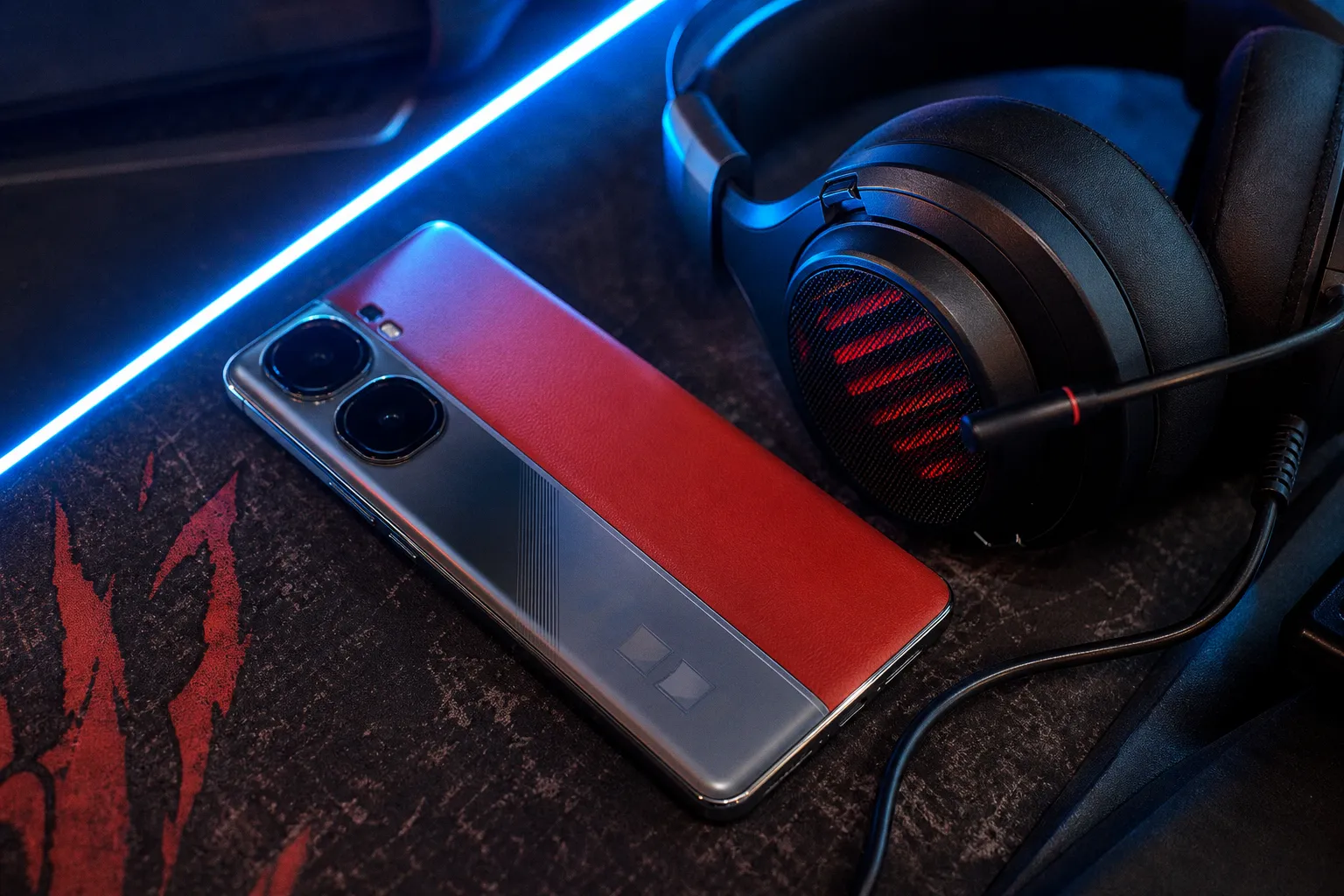
You're fifteen seconds from a chicken dinner. The circle's closing fast. You peek the ridge, crosshair steady, finger hovering over fire — and then stutter. Frame drop. Your phone just cooked itself mid-clutch, and your squad's tournament run dies on the ridge. Welcome to the sub-40,000 INR arena, where every brand swears their silicon is the fastest, every spec sheet screams "gaming beast," and every YouTube thumbnail promises glory. We're cutting through that noise. No fluff. No spec-sheet poetry. Just the three things that actually decide whether your phone clutches the round or chokes when it counts.
This isn't a buyer's guide written from a press kit. This is frontline intel from someone who's watched top-eight squads swap phones between scrims, who's seen a player wipe an entire team only to lose the next gunfight because his display ghosted at the worst possible second. The sub-40k segment in 2024 is absolutely stacked — but stacked with contenders, not champions. Picking wrong costs you ranked points. Picking right? That's the difference between a top-five finish and another L on the board.
Step 1: Thermal Stability Beats Benchmark Scores Every Single Time
Here's the ugly truth nobody on a spec sheet wants to tell you: AnTuTu scores don't clutch rounds. Sustained thermal performance does. We can already hear the arguments — "But the POCO F6 hits 1.5 million on AnTuTu!" — and yeah, it does. The POCO F6, launched in India back in May 2024 with the Snapdragon 8s Gen 3 under the hood, absolutely demolishes synthetic benchmarks. On paper, it's a monster. In your hand, after thirty minutes of BGMI in Erangel? That's where the story gets interesting.
The problem isn't peak performance. It's sustained performance. Every flagship-grade chip throttles when heat builds up — the question is how gracefully it does so. A phone that hits a buttery 60 FPS for two minutes and then drops to 42 FPS mid-gunfight is worse than a phone that holds a steady 55-58 FPS through an entire match. The clutch 1v4 you needed? Gone. The rotation through Pochinki? Frame drops. The final circle peek? Lag spike. We've seen it happen at LAN qualifiers — and it kills momentum faster than a bad callout.
Benchmarks tell you what a phone can do in the first thirty seconds. Thermal stability tells you what it does when the lobby's on the line.
This is exactly why the iQOO Neo 9 Pro — launched in India back in February 2024 — has quietly become the favorite among competitive players who actually push their hardware for hours at a time. It runs the Snapdragon 8 Gen 2, but more importantly, iQOO paired it with their dedicated Supercomputing Chip Q1 for frame interpolation and workload offload. Translation: when the SoC starts getting warm and pulls back, the Q1 chip steps in to smooth frames and handle ancillary tasks. It's not magic — thermal throttling still exists — but the sustained output stays noticeably more consistent across a four-hour session.
The lesson here is brutally simple. Stop shopping benchmarks. Start shopping cooling systems. Vapor chambers, graphite sheets, multi-layer heat dissipation, copper piping — these are the specs that win you chicken dinners in extended sessions. The phone that manages heat is the phone that manages the lobby.
Step 2: Display and Input — Where Every Millisecond Matters
You can have the most powerful chip on the market, but if your display ghosts at a low touch sampling rate while your opponent's phone registers their flick shot at near-instantaneous response, you've already lost before the bullet leaves the barrel. In competitive mobile esports — whether it's BGMI, Call of Duty Mobile, Free Fire MAX, or the latest Asphalt ranked grind — input responsiveness is the great equalizer.
The industry standard in 2024 for a gaming phone under 40000 is a 120Hz refresh rate display. Some devices in this bracket push 144Hz. That's your visual smoothness — the frames your eyes actually see. But the number most casual buyers completely miss? Touch sampling rate. This is how many times per second your screen checks for finger input. The baseline for serious competitive play sits at 300Hz. The premium tier? Up to 2000Hz instantaneous touch sampling on certain devices in this segment. That's not a typo.
Let's break that down with something concrete. When you flick-scope in BGMI, your thumb swipes across the screen in roughly 80-120 milliseconds. A 300Hz touch sampling rate means your phone polls for input every 3.3 milliseconds — so it catches the start, middle, and end of your flick with surgical precision. Drop that polling rate down significantly, and you're working with longer intervals between samples. Sounds tiny? It is. And it's the difference between your crosshair landing center-mass or drifting two pixels to the left while your opponent's red dot snaps clean onto your helmet.
Then there's the display tech itself. AMOLED has become the de facto standard in this segment for good reason — deeper blacks for spotting enemies crouched in shadow, faster pixel response times, and typically higher peak brightness for those outdoor tournament venues where the sun wants to blind your screen. The POCO F6 and the iQOO Neo 9 Pro both run AMOLED panels in this bracket, and both deliver the kind of color contrast that makes spotting a prone enemy in grassy terrain or a camper behind a crate actually possible.
Your display isn't just showing you the game. It's the bridge between your reflexes and the server. A weak bridge costs you kills — and rounds.
One more thing the spec sheets bury in fine print: intelligent touch optimization. Some phones now offer touch prediction algorithms that preempt where your finger is heading and register the input slightly before your thumb physically lands on the glass. It's subtle. It's also why pro players don't game on budget panels anymore — they can't afford that micro-latency tax when every frag counts.
Step 3: Charging and the Lobby-to-Lobby Grind
A dead phone in the lobby is a forfeit. Period. You can have the best thermals and the fastest display in the segment, but if your battery dies between matches or you're tethered to a wall socket during a tournament, none of it matters. Power delivery is a competitive weapon — and the sub-40k segment has gone absolutely feral on it.
We're talking 67W to 120W fast charging now being standard fare across this bracket. That means a full top-up in roughly 25-30 minutes on devices like the iQOO Neo 9 Pro and POCO F6. Pop your phone on charge between scrims, grab a water bottle, stretch your wrists — and by the time you're back in the lobby, you've got a full tank. That cycle speed alone has changed how Indian esports teams manage their tournament days.
But raw wattage isn't the whole story. Battery cell quality and software optimization determine how long that charge actually lasts under gaming load. A phone with a 5000mAh cell and intelligent power management will outlast a 5500mAh phone with a poorly optimized chip that eats power for breakfast. Look for devices with adaptive charging features that learn your play patterns and manage thermal output during peak draw — the phones that do this well are the ones that survive a six-hour grind session without begging for an outlet.
Here's a pro tip most casual buyers miss entirely: bypass charging. Some gaming phones in this segment now offer the ability to route power directly to the motherboard while you're plugged in, bypassing the battery entirely. This means your phone stays cool during long sessions because the battery isn't cycling and generating heat. If your shortlisted phone supports this — it's a massive edge during LAN events or marathon ranked sessions where you're literally tethered to a wall for hours.
The Head-to-Head: POCO F6 vs iQOO Neo 9 Pro
Let's get specific. These are the two phones dominating the sub-40k conversation in Indian mobile esports right now, and for good reason. Both launched within months of each other. Both pack serious silicon. But they're built with different philosophies — and that matters for how you actually play.
| Parameter | POCO F6 | iQOO Neo 9 Pro |
|---|---|---|
| Processor | Snapdragon 8s Gen 3 | Snapdragon 8 Gen 2 |
| Dedicated Gaming Chip | None | Supercomputing Chip Q1 |
| Display | 120Hz AMOLED | High-refresh AMOLED (up to 144Hz variant-dependent) |
| Touch Sampling | Industry-standard high tier | High tier with enhanced optimization |
| Benchmark Headline | 1.5M+ AnTuTu | Strong synthetic, better sustained output |
| Thermal Approach | Advanced vapor chamber | Multi-layer cooling + Q1 workload offload |
| Fast Charging | 120W supported | 120W supported |
| Target Player | Spec-sheet chasers, benchmark maximalists | Competitive players running long sessions |
The POCO F6 is the spec-sheet king. If you want the highest benchmark number you can flex in your squad's group chat, this is your pick. The Snapdragon 8s Gen 3 is a newer chip and it posts genuinely impressive synthetic numbers. For casual-to-midcore play across multiple titles, it's an absolute steal — and it's priced aggressively enough to leave room in your budget for triggers, earbuds, or a cooler.
The iQOO Neo 9 Pro is the tournament play. The Snapdragon 8 Gen 2 is technically last-gen flagship silicon — but it's mature silicon. iQOO has had months to optimize the thermals, and the Supercomputing Chip Q1 takes real workload off the main SoC. When you're four hours deep into a tournament bracket, this phone is still hitting its rotation frames while the spec-sheet king starts gasping for thermal headroom.
Matching the Hardware to Your Playstyle
Here's where the "shortcut" actually pays off. Buying the most expensive phone on this list doesn't guarantee it's the right phone for you. We've watched players drop 40K on a device they can't fully leverage because they were chasing the wrong spec, the wrong benchmark, the wrong flex.
If you're a ranked grinder who plays two-hour sessions of BGMI every night and lives for that Ace tier push — prioritize thermal stability and sustained frame rates. The iQOO Neo 9 Pro's cooling architecture and Q1 chip are built for exactly this workload. You won't top benchmark charts, but you'll clutch more 1v4s because your phone didn't stutter on the peek that mattered.
If you're a spec-head who plays across multiple titles — BGMI one day, Genshin Impact the next, COD Mobile the day after — and you switch between high-demand games regularly, the POCO F6's raw power gives you more headroom across varied workloads. The newer Snapdragon 8s Gen 3 handles different game engines with strong peak performance and aggressive thermal management for shorter bursts.
If you're a content creator who streams or records your gameplay, look at both phones' sustained thermal output under simultaneous game + capture load. This is where the gap widens — the phone that handles gaming alone might choke when you add screen recording at 60 FPS to the mix. Test before you commit. Seriously. Don't learn this lesson mid-tournament.
The best gaming phone under 40000 isn't the one with the highest benchmark. It's the one that performs when you're three hours deep, four squads left, and everything's on the line.
The Verdict: What We Recommend
So what's the actual call? The iQOO Neo 9 Pro edges out as our top pick for competitive mobile esports players in India under the 40k bracket — not because it wins the spec-sheet war, but because it wins the sustained engagement war. The Q1 chip's frame interpolation, the mature Snapdragon 8 Gen 2 thermal profile, and the 120W charging support make it a complete package for anyone grinding the ranked ladder or running tournament brackets. If clutch consistency is your game, this is your hardware.
But let's be real — the POCO F6 is a close second that punches way above its weight, especially if you're buying on a slightly tighter budget or you prefer the newer Snapdragon 8s Gen 3 architecture. For sub-30K, it's genuinely hard to beat on raw value. Don't sleep on it.
The bigger point? Stop buying phones. Start buying sustained performance. The sub-40k segment in India has never been this competitive, and the gap between "flagship killer" and "actual gaming phone" is real — even if the spec sheets don't tell you that story. Benchmarks lie. Thermals don't. Display polling rates don't. Charging cycles don't. Choose accordingly, and choose for the lobby, not the launch event.
Now — which one are you slotting into your loadout for the next ranked push? Drop your squad's picks below and let's see who's running what this season.