Free Fire MAX India Cup 2026 Spring - Free Fire - Viewership, Overview, Prize Pool
The Free Fire MAX India Cup 2026 Spring has officially entered the analytical spotlight, with Esports Charts beginning to track the critical viewership and prize pool metrics that define the current mobile esports trajectory in India.
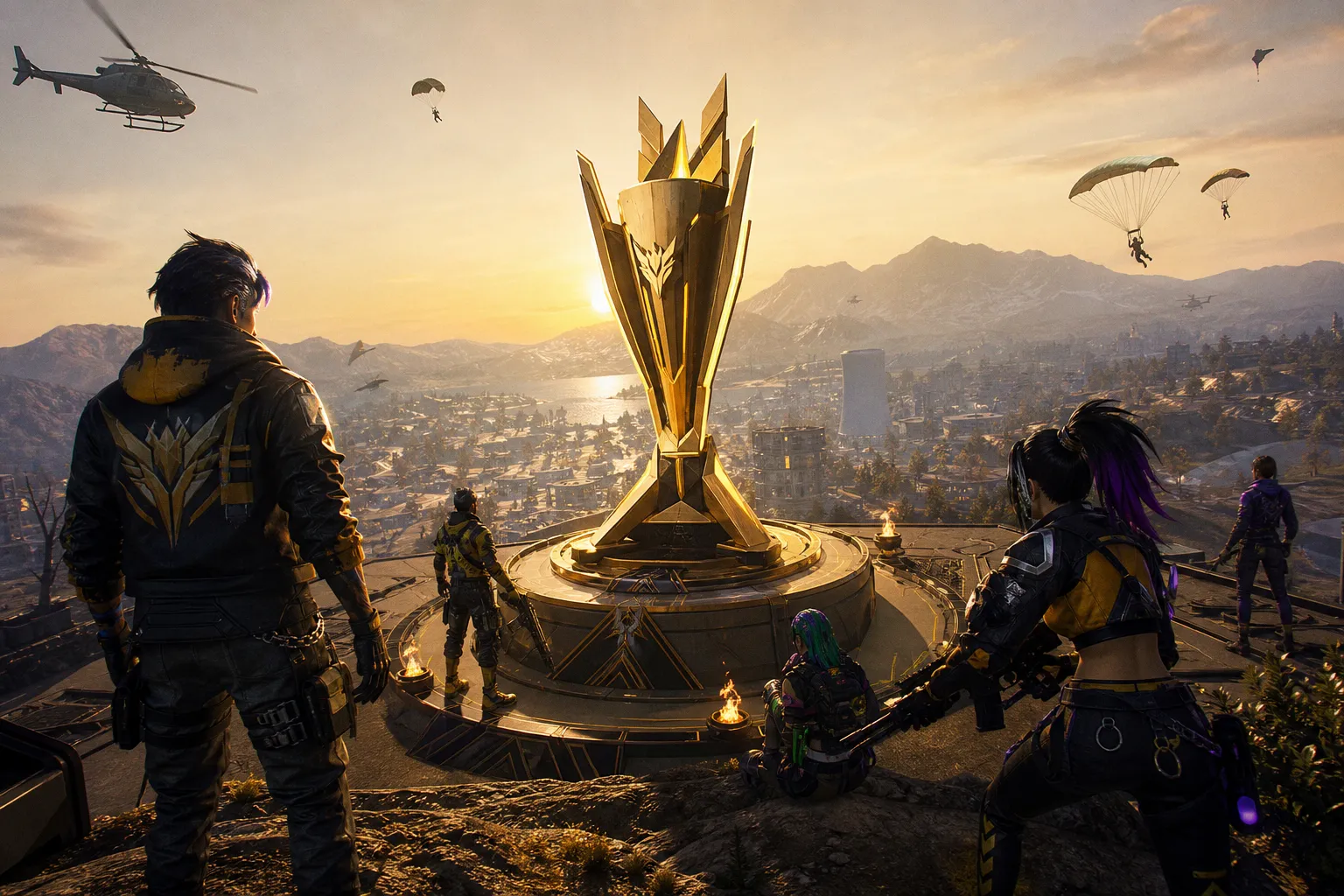
This tournament arrives amidst a significant shift in regional infrastructure, evidenced by Rajasthan hosting its first-ever Major LAN championship and the final call for Indian representatives for the Esports World Cup 2026. For high-performance mobile gaming enthusiasts, these events represent the ultimate thermal and latency stress tests for current-gen hardware in a competitive environment.
Data-Driven Overview of the India Cup
The Free Fire MAX India Cup 2026 Spring is currently being scrutinized for its viewership performance and prize pool distribution, metrics that serve as a proxy for the title's optimization and player retention in the Indian market. While specific peak concurrent user (PCU) counts are being finalized by tracking platforms like Esports Charts, the "Overview" phase highlights the sustained demand for high-refresh-rate stability in competitive Battle Royale environments. From a hardware analyst's perspective, these tournaments are not merely entertainment; they are benchmarks for SoC (System on Chip) efficiency under the sustained thermal loads required by Free Fire MAX's high-fidelity assets and complex particle effects.
The prize pool structure, a key component of the India Cup 2026 Spring, dictates the level of professional commitment and, by extension, the hardware requirements for participating teams. As the stakes increase, the margin for frame-time variance narrows. We are observing a trend where the "Spring" split serves as a calibration period for teams to optimize their device configurations and cooling solutions to ensure that peak performance is maintained throughout the multi-match format of the cup.
For related context, see Stablecoins, USDT, Tether and crypto market news.
For related context, see Educational gaming and edutainment: educational games, brain and puzzle, games for.
Regional Infrastructure and Global Qualification
The broader Indian esports ecosystem is undergoing a decentralization of high-tier competitive play, marked by Rajasthan hosting its first-ever Major Esports LAN Championship. This move toward localized LAN environments necessitates a rigorous evaluation of networking stability and device cooling solutions outside of traditional tech hubs. For the mobile gaming niche, this signifies that competitive-grade performance must now be achievable in diverse environmental conditions, placing a premium on devices with robust internal thermal dissipation systems.
Simultaneously, the competitive pipeline is reaching a critical junction with the final application window for the Esports World Cup 2026. This represents a "last chance" for Indian athletes to validate their performance profiles on a global stage. This push for international representation is further bolstered by the reveal of India’s MOBA Legends 5v5 team for the Esports Nations Cup 2026. Whether it is the rapid-fire response times required in Free Fire MAX or the sustained strategic processing needed for MOBA titles, the current landscape demands a diversified approach to hardware benchmarking. We are no longer looking at a single-title market; the 2026 season is a multi-genre stress test for the Indian mobile gaming infrastructure.