Why Skyesports Bans Certain Gaming Phones from LAN Events
Skyesports made a small but consequential announcement ahead of the Championship 5.0 LAN Finals: every player on the main stage would compete using an iPhone 15 Pro Max handed out by the organizer, not the personal gaming handset they had qualified with.
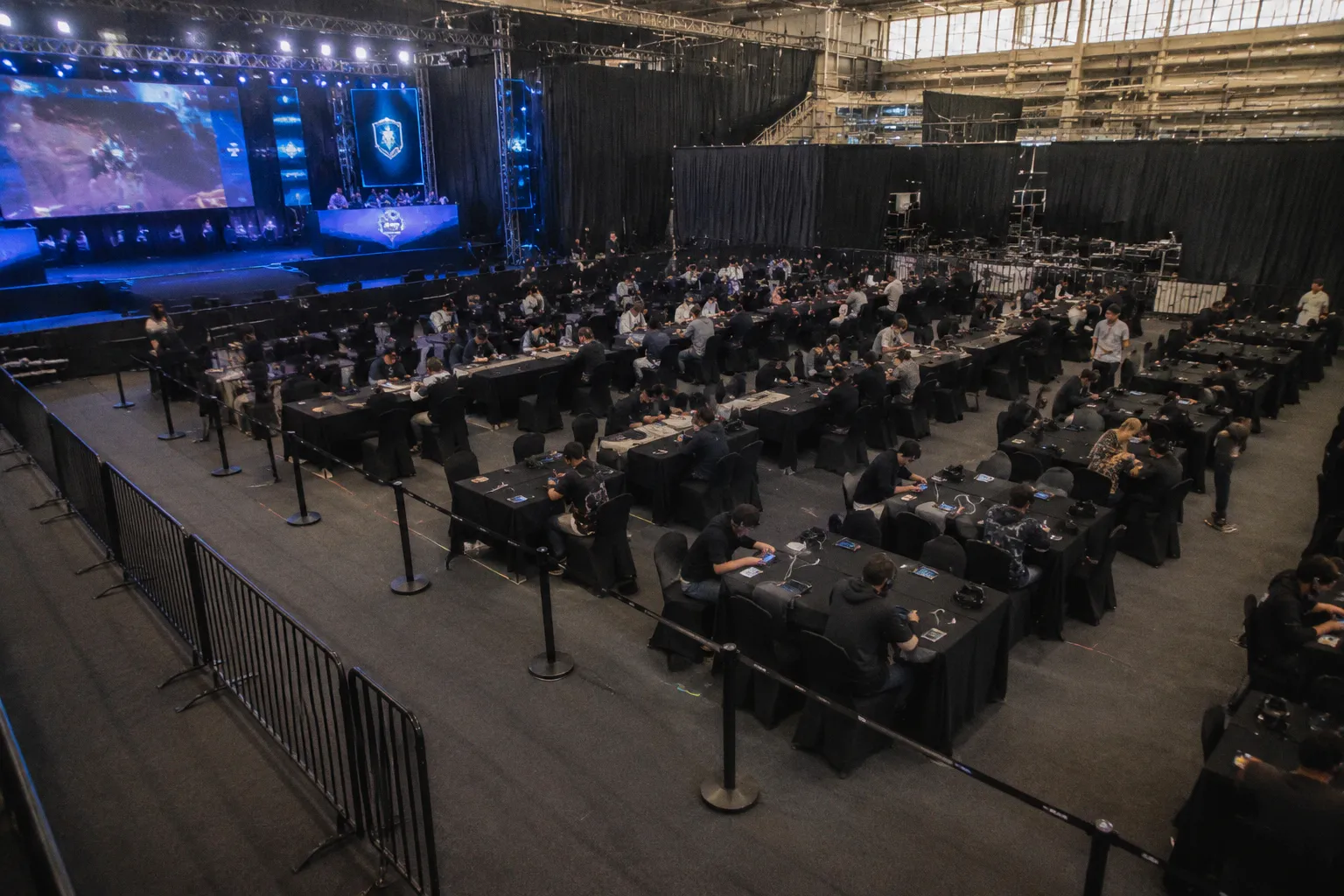
This is not a quirk. It is a calculated move to protect competitive integrity, lock down broadcast parity, and — let's be honest — extract more value from smartphone sponsorships. The restriction targets a narrow but powerful class of devices: gaming phones with built-in hardware triggers, capacitive shoulder buttons, and software macro engines. For ambitious players grinding through open qualifiers, knowing which devices are blacklisted is the difference between packing your bag for the LAN and watching the finals from a Discord stream.
Skyesports isn't banning phones because they perform poorly. They're banning them because they perform too well — in the wrong direction.
The Hardware Cheating Problem: Triggers and Capacitive Buttons
The first thing to understand is what Skyesports classifies as "hardware cheating." The category covers two related features that have become standard on gaming phones like the ASUS ROG Phone series, RedMagic handsets, Poco F-series GT variants, and a handful of Black Shark models. The first is physical or capacitive shoulder triggers — extra buttons mounted on the frame of the phone that map to in-game actions like firing, jumping, or aiming down sights. The second is the macro layer: software that lives inside a vendor's "Game Center" or "Game Space," capable of automating recoil patterns, rapid-fire inputs, or chained combos with a single tap.
To a casual player, both features look like ergonomic upgrades. To a tournament organizer running a multi-lakh prize pool event, however, they look like the only thing standing between clean competition and a cheating scandal. The logic is straightforward. A trigger that fires faster than a thumb can press a screen gives a measurable, repeatable advantage. A macro that compensates for weapon recoil eliminates the skill curve that defines the best players. Once a single competitor uses them, the rest are forced to adapt or fall behind. The integrity of the bracket collapses.
Skyesports has effectively drawn a line: any phone whose defining feature is "it has extra buttons or automates inputs" is treated as contraband on the main stage. This is why models like the ROG Phone and RedMagic series sit on the restricted list for the Skyesports Championship 5.0 finals and the subsequent Grand Slam and Masters LANs in 2024.
The iPhone Mandate: Standardization at the Top
Banning a class of devices creates a vacuum, and Skyesports filled it with a deliberate choice: standardized iPhones. At the Skyesports Championship 5.0 LAN Finals, every player on the main stage competed using an iPhone 14 Pro Max or iPhone 15 Pro Max supplied by the event. No personal devices, no negotiated exceptions, no "but my hands are calibrated to my phone" appeals.
The reasoning behind the mandate is not brand loyalty. It is risk mitigation. A standardized device means identical touch latency for every player in the room, no performance deltas from background apps, custom skins, or thermal throttling, a closed iOS sandbox that cannot be modified mid-match, and predictable battery behavior for the full duration of a multi-game finals day.
For BGMI specifically, the iPhone 15 Pro Max also gave Skyesports a path to enforce 90 FPS across the board — a standardized frame rate that has become the de facto ceiling for Indian mobile LANs. Conversely, the high refresh rates of 144Hz or 165Hz that gaming phones aggressively market are deliberately not unlocked for the official stage. Higher refresh rates introduce input method complications and require a level of consistent software tuning the organizer does not want to oversee mid-tournament.
The trade-off is clear. Players lose the freedom to use a device they have practiced on. In return, no one can blame a loss on a hardware mismatch, and the broadcaster can guarantee that every clip, kill cam, and slow-motion replay reflects the same playing field.
Standardization isn't player-friendly. It's controversy-proof.
Software Macros: The Hidden Automation Threat
Hardware triggers are the obvious target, but the deeper problem — and the one Skyesports has been quietly tightening rules around — is the software macro layer. Most modern gaming phones ship with a built-in "Game Center" or "Game Space" that lets users record input sequences and replay them on demand. A recoil-compensation macro for an M416, for example, is a few taps away.
Skyesports has made this category explicitly prohibited, even on devices that are otherwise eligible. The rule applies whether the macro is running natively from a phone's vendor software or from a sideloaded utility. The line drawn by the organization is simple: any software that automates, replicates, or speeds up player inputs in a way that exceeds human capability is grounds for disqualification. Zero-tolerance policy, no warnings.
This is where the "No Personal Device" policy on the main stage earns its weight. If a player brings their own phone, the organizer has no way to verify — within the time constraints of a tournament schedule — that the device has not been rooted, sideloaded, or modified with a custom input app. By mandating a freshly wiped iPhone that the event controls end-to-end, Skyesports removes that risk vector entirely.
For online qualifiers run off-site, the calculus is different. There, players typically use their own devices, and verification is largely honor-based plus periodic spot-checks. The strictest enforcement is reserved for the stage that the cameras are pointed at.
Sponsorship Money Talks: When Brands Choose Your Weapon
The financial layer of the story is the part that rarely makes the recap highlight reel. Skyesports runs on sponsor revenue, and smartphone brands are among the largest commercial partners in the Indian mobile esports ecosystem. When Tecno, Google Pixel, or a comparable manufacturer signs on as the official smartphone partner of a Skyesports event, the device you use on stage becomes part of the deal.
This is not a fringe consideration. Sponsorship contracts for major Indian LANs often include device mandates as a deliverable. The brand pays for visibility; in return, every camera frame shows their logo, every player uses their handset, and every post-match interview is filmed against their backdrop. The ROI math makes it impossible to ignore. The ecosystem runs on brand spend, and brand spend comes with strings.
The result is that the device you bring to a Skyesports LAN may be overruled by whichever manufacturer wrote the biggest check for that particular tournament cycle. Players are notified in advance through the official rulebook, and roster announcements are routinely accompanied by a smaller, less-read device appendix that lists the exact permitted models.
| Restriction Category | Reason | Common Examples |
|---|---|---|
| Hardware triggers (capacitive / physical) | Provides unfair input advantage | ASUS ROG Phone series, RedMagic series |
| Software macro engines | Automates input patterns beyond human capability | Vendor "Game Center" macro recorders, sideloaded input apps |
| 144Hz / 165Hz high refresh rates | Inconsistent across devices, complicates fairness | Most gaming-centric Android handsets |
| Personal devices on main stage | Risk of unauthorized software or modifications | All player-owned phones during LAN finals |
| Off-brand devices when a sponsor is in play | Sponsorship contract deliverable | Phones not made by the official smartphone partner |
The table above is not exhaustive, but it captures the categories that show up in Skyesports rulebooks most consistently. Players should treat it as a working checklist when assessing eligibility for any upcoming LAN.
Verifying Your Device: The Practical Checklist
The question most players actually need answered is simple: will my phone be allowed? The answer lives in the rulebook, but the rulebook is rarely summarized in one place. Here is how to verify your device against Skyesports tournament requirements before committing to a qualifier:
1. Pull the official rulebook for the specific event. Skyesports publishes a separate rulebook for each major tournament cycle — Championship, Grand Slam, Masters — and the device list is not always identical between them. Do not assume 2023 Championship rules still apply in 2024.
2. Search the PDF for terms like "permitted devices," "smartphone specifications," "hardware restrictions," and "triggers." The device appendix is usually buried in a later section, often under "Equipment Rules" or "Stage Regulations."
3. Check for the iPhone mandate. If the event specifies that iPhone 14 Pro Max or iPhone 15 Pro Max hardware is provided, your personal device is irrelevant for the main stage — you will not be allowed to plug it in.
4. Look for a "No Personal Device" clause. This phrase is the giveaway that the main stage is fully standardized. For qualifiers, the rule is usually relaxed.
5. Confirm the official smartphone sponsor. If the rulebook names a brand like Tecno, Realme, or Google Pixel as the official partner, expect a device mandate that lines up with that brand's flagship line.
6. Check the FPS ceiling. The standardized target for BGMI LANs is 90 FPS. If your device is built around 144Hz or 165Hz, that hardware is irrelevant on the official stage and may actively disqualify the device.
7. Watch for macro engine rules. The rule will usually be phrased as "no software that automates inputs" or "vendor Game Centers must be disabled." If your phone ships with a built-in macro recorder, that feature must be turned off, and the device may still be flagged in a stricter check.
8. Email the tournament administrator if anything is ambiguous. Most organizers reply within 48 hours, and confirmation in writing is the only proof that protects you in a dispute.
The verification work is tedious, but the cost of skipping it is asymmetric. A single disqualified device mid-tournament can end a roster's run before the bracket is half-drawn.
What This Means for the Indian Mobile Esports Ecosystem
The Skyesports model is not unique globally, but it is unusually strict for a market where the majority of competitive players still game on mid-range Android handsets. By standardizing the stage on iPhones and locking out gaming phones, Skyesports is making a bet that broadcast quality, sponsor alignment, and integrity outweigh the populist appeal of letting players use whatever they own. From an economic standpoint, the math is sound. From a player's standpoint, the rules feel imposed rather than negotiated.
The interesting question — and the one that will shape the next two years of the Indian LAN circuit — is whether 120 FPS support in BGMI forces a relaxation of the current 90 FPS standard. If the game engine unlocks higher frame rates for tournament play, the existing device argument (we cap at 90 FPS, so any 144Hz+ phone is overkill) weakens. Organizers will then have to either expand the permitted device list to include capable Android flagships or double down on iPhone standardization. The latter is cheaper, easier to enforce, and more sponsor-friendly. Expect it.
For players grinding through open qualifiers, the practical takeaway is this: the device you practice on is the device that qualifies you. The device you compete on at the LAN may be entirely different. The two are decoupling, and Skyesports is one of the organizations pushing that decoupling hardest. Treat the rulebook as a competitive variable, not an afterthought. The teams that read the device appendix before every roster announcement will be the ones still standing when the bracket collapses. For a wider lens on how technology brands court younger consumers beyond the tournament floor, the lifestyle and culture coverage at burcusaral.com is worth reading alongside the official rulebooks.