India Rising: Road to EWC Concludes in Mumbai
2-1. That was the set score by which Dutch Grandmaster Benjamin Bok beat Indian Grandmaster Vidit Gujrathi to qualify for the Esports World Cup 2026 Chess competition at India Rising: Road to EWC in Mumbai.
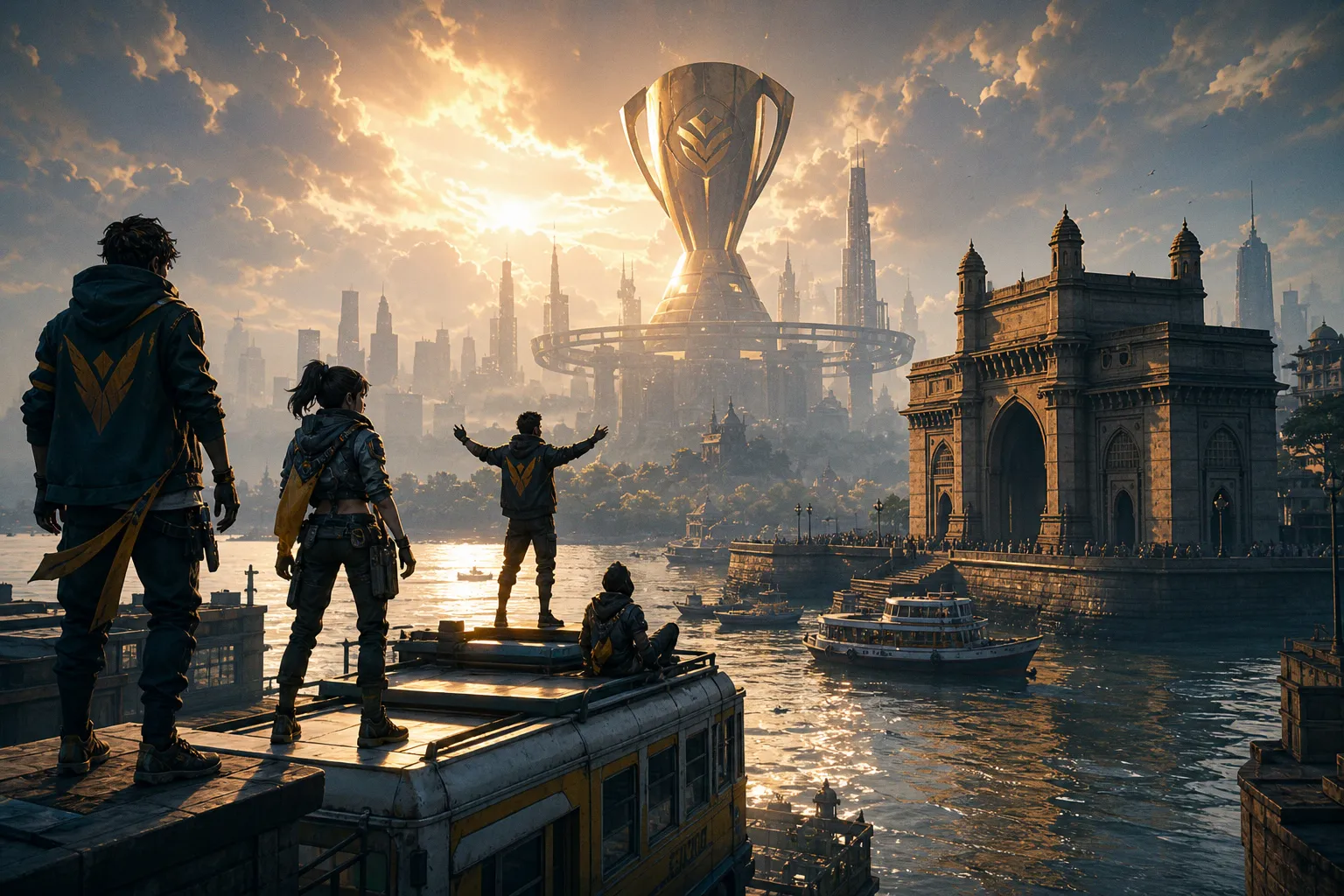
Qualification, not just crowd noise
The clean competitive output from the weekend is Bok’s qualification for the EWC 2026 Chess competition. That is the hard result. Everything else around it — youth culture, creator appearances, live entertainment — is packaging unless it creates repeatable pathways for players.
India Rising: Road to EWC was launched by JioBLAST and the Esports Foundation, and the grand finals in Mumbai closed the festival run. The event brought together competitive chess, esports, gaming creators, fan experiences, cosplay, gaming zones and live entertainment.
For teams and players in Indian mobile titles, the useful signal is structural. A qualifier attached to a larger festival gives sponsors, state officials and mainstream audiences a simple metric to understand: win, qualify, advance. That is easier to sell than vague “community growth”.
But it also raises the bar. If mobile esports wants the same treatment, scrims and showmatches are not enough. Formats need clear qualification logic, stable rules, and broadcast-ready match flow. Frame pacing matters on device. So does bracket pacing on stage.
Government support is useful, but not performance
Maharashtra Chief Minister Devendra Fadnavis inaugurated the festival and spoke about the state’s ambition to become a major destination for gaming, esports, digital content and the creator economy. The stated focus was policy, infrastructure and industry partnerships.
That is relevant. Venue access, event permissions, brand confidence and production scale all improve when esports is treated as part of the digital creative economy rather than a side activity. Mumbai being positioned at the centre of this push gives organisers a visible stage.
Still, official support does not automatically create better players. It does not fix weak practice schedules, unstable rosters, thermal throttling on match devices, poor recovery, or bad review discipline after losses.
For Indian mobile squads, the training takeaway is blunt: use the ecosystem, do not hide behind it. Better festivals can create exposure. They cannot replace aim blocks, VOD review, comms drills, role clarity, sleep discipline and device consistency.
Creators, orgs and the attention layer
The festival featured organisations including S8UL and GodLike, interactive fan experiences, cosplay, gaming zones and a live performance by Seedhe Maut. The inaugural Gaming Honours also recognised figures in the Indian gaming ecosystem, with Mortal and 8Bit Thug named for outstanding contribution to Indian esports.
This is the attention layer around competition. It is valuable when it brings new viewers into the funnel. It is a problem when it becomes the whole product.
Indian mobile esports already understands the creator-team overlap better than most markets. The risk is imbalance. If the crowd comes for the creator but leaves before the match matters, the competitive layer has failed its retention test.
The next thing to track is whether India Rising becomes a recurring platform with more qualification routes and clearer competitive outputs. JioBLAST’s CEO Charlie Cowdrey described this as a first chapter, while the Esports Foundation’s James Cunningham framed it as a pathway connecting Indian audiences and players with the global Esports World Cup ecosystem.
Verdict: track it. Do not overrate it. For players, the value is not the stage lights or the artist slot. It is whether events like this create measurable routes from Indian competition to global brackets. Until that becomes repeatable, this is promising infrastructure — not proof of performance depth.